Forming a Reading Culture
Reading the Bible faithfully, for hope, and with love
“All Scripture is God-breathed and is useful for teaching, rebuking, correcting and training in righteousness, so that the servant of God may be thoroughly equipped for every good work.”
2 Timothy 3:16–17
How to use
The talk as written for the workshop, with each slide beside the part it goes with. Section headings are added for reading.
The Moses way and the Jesus way
On a hike with my friend Zac in a northern California redwood forest, I commented on the trail: “This is the opposite of the Moses way!” Most of the hiking trails I did were hiking up a mountain and then getting back down, just like Moses climbing up Mount Sinai to meet with God and then bringing back the stone tablets to the children of Israel (Exodus 34). Ascent preceding descent, which I call “the Moses way”. However, that trail was different. We couldn’t tell what the terrain was like because of the surrounding sequoias. We hiked downward into a valley, looped around it, and finally climbed up to the trailhead. It’s always a great time hiking with Zac, and I saw banana slugs for the first time!
What’s more, that hiking trail made me think, what is the opposite of “the Moses way”? To whom does descent go before ascent? That must be “the Jesus way”. Jesus descended from heaven to put on human flesh, humbly dwelling among us. His obedience led him to the cross, and he even descended to the valley of death. But he resurrected, rose from the grave. Then God exalted him to the highest place, and gave him the name that is above every name (Philippians 2:11). This is too wonderful. Feel free to pause reading and savor the gospel. Those two pathways are just different orders of the same orientations, which both matter. For anyone who desires to encounter God and be transformed, ascent is an act of obedience, while descent is an act of love.
A reading culture
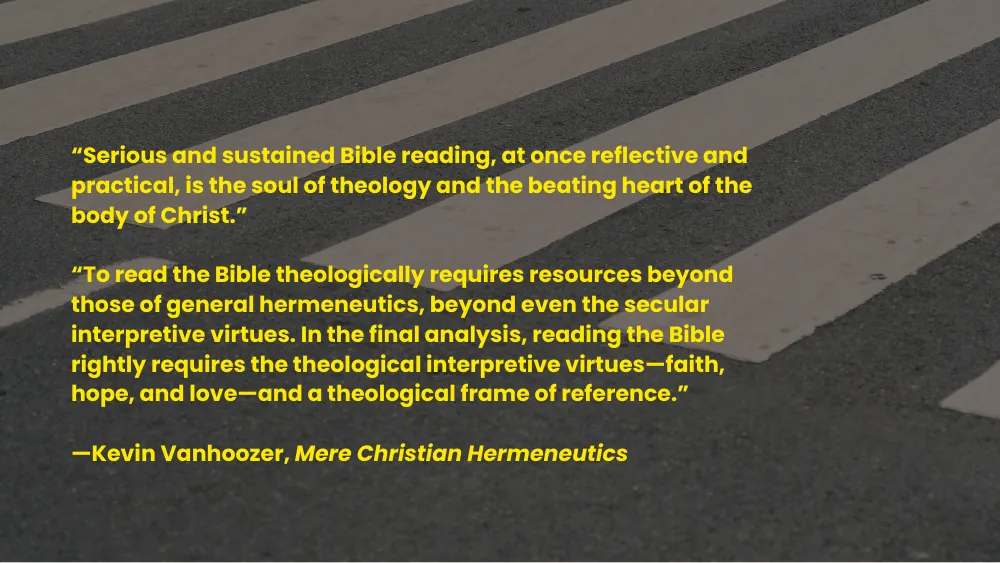
Studying the Bible is such a journey that contains both orientations, and here we have the roadmap unfolding before us. What kind of trail is it, and what views can we expect along the way? The vision is to form a reading culture, which Kevin Vanhoozer describes in Mere Christian Hermeneutics: “Serious and sustained Bible reading, at once reflective and practical, is the soul of theology and the beating heart of the body of Christ.” Vanhoozer’s work is an attempt to explore and answer this question: Is there a mere Christian hermeneutics? In other words, when it comes to understanding and interpreting the Scripture, is there an approach that is shared across the historic and global church? In my view, a mere Christian hermeneutics must be rooted in the mere Christian identity — people who know how to represent the kingdom of God everywhere to everyone at all times. Throughout generations, Christian communities form reading cultures, and reading cultures cultivate Christian identities and purposes in return. To form a reading culture, we first need to understand the nature of the Holy Scripture.
What Scripture is
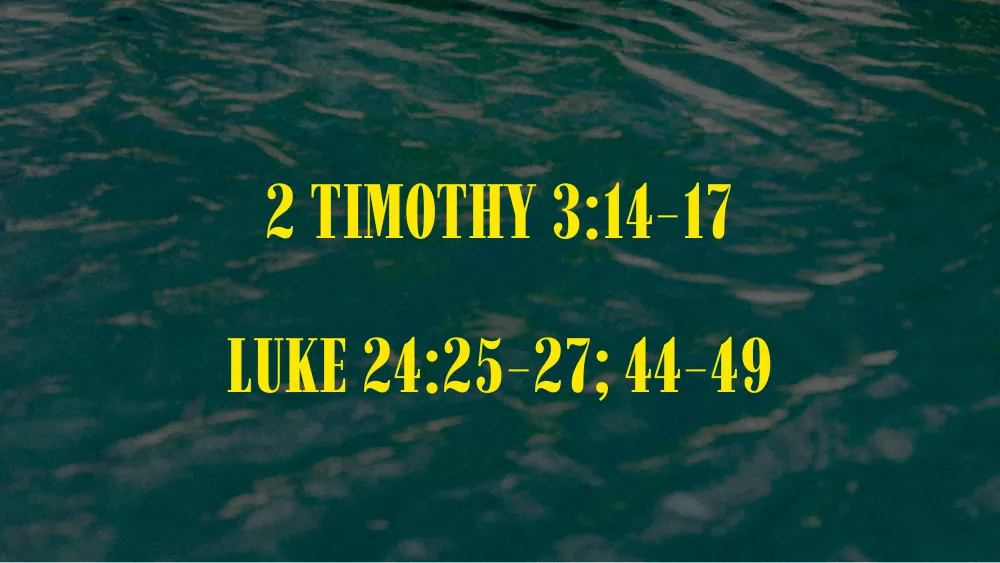
In his letter to Timothy, Paul pointed out that “All Scripture is God-breathed and is useful for teaching, rebuking, correcting and training in righteousness, so that the servant of God may be thoroughly equipped for every good work.” (2 Timothy 3:16-17). There is a divine author and His intention behind the Scripture; therefore, it holds authority rather than merely serving as a resource of information. Therefore, the Bible is beneficial for all aspects of the formation of the servants of the Lord. Luke 24 provides another perspective on the nature of Scripture. On the road to Emmaus, the resurrected Lord Jesus joined the company of some desperate disciples, who thought their hope was lost after the crucifixion. Nevertheless, “Beginning with Moses and all the Prophets, Jesus explained to them what was said in all the Scriptures concerning himself.” (Luke 24:27). The disciples recognized Jesus when he broke bread with them, and then he opened their minds so that they could understand the Scriptures. We all need that “Aha!” moment. The road to Emmaus in Luke’s gospel helps us to see the other side, that the Bible is all about Jesus, who is the Son of God.
In short, the Scripture is for us but not (primarily) about us. There is a dual nature of the Scripture as the written word of God — both humanity and divinity. They do not contradict each other, but the understanding of their co-existence is something every student of the Bible needs to wrestle with. The Bible Project made a statement on the nature of the Scripture: “When we explore its humanity, we will discover its divinity; when we confess its divinity, it’ll transform our humanity.” It may take a lifetime journey to truly comprehend and fully appreciate the beauty of the Word of God.
Philology: our posture before the text
The dual nature of the Scripture leads to two aspects of our Bible study framework: philology and christology. Philology comes from Greek roots: "philo-" meaning "loving" or "friend", and "logos" meaning "word", or "study". So, philology literally means "love of words", and it invites us to pay close attention to the biblical text. Philology is the craftsmanship of biblical interpretation. Imagine a carpenter with multiple skills and a variety of tools. Before working on a project, she must evaluate the project to decide which tools to use and which skills to apply. Sharpening the axe never delays the process of woodcutting. Similarly, when we start a study project on a passage, we need to ask first: What is the literary style of the passage? Is it narrative or biblical poetry? Wisdom literature or prophecy? Then we can apply the Bible study methods accordingly, using the right tools for the right work. Philology is more about the intention than the means. When philology becomes our posture of humility and patience, we can allow the text to say what it says, and make space for our hearts and minds to listen carefully and study faithfully.
Christology: the firm foundation of the Word
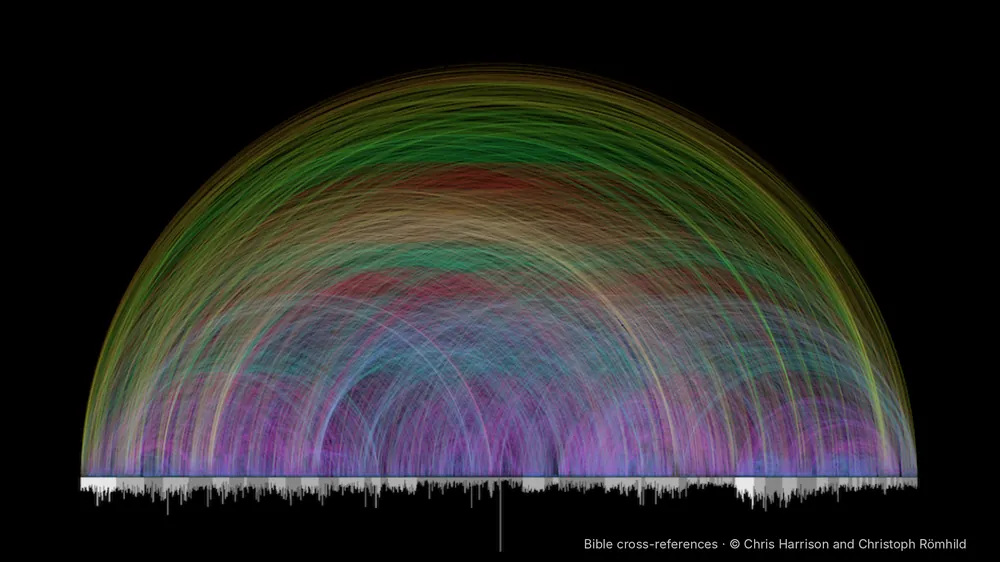
Christology asks one question: “What holds Christianity together?” The answer is nothing else but a person, as John Stott simply and profoundly declared in his book Basic Christianity: “Christianity is Christ.” Christology means that Jesus Christ is the center of the unified story of the Bible. All of Scripture ultimately points to him, finds coherence in him, and is fulfilled through him. As a discipline, philology sets our hearts’ posture before the written word of God; as a guidance, christology opens our eyes to behold the glory of Jesus, who is the living Word of God. When both philology and christology are applied, the parts of the Scripture no longer play by themselves, but join the symphony of the whole picture. This is when unity dances with diversity. Now, more questions are raised. How do we see the Scripture as a unified, unfolding story? How do we read the Bible in light of Christ? What does the story of the Bible have to do with our lives?
Inhabit the story
There are four major movements in the meganarrative of the Scripture: Creation, Fall, Redemption, and New Creation. The Gospel starts with creation: in the good and beautiful world, humans are invited into an intimate relationship with God, carrying out divine callings as God’s image-bearers. In the fall, the autonomy behind sin leads to alienation between God, humanity, and the rest of the creation, but the story of God and His people does not end there. Through life, death, and resurrection, Jesus provides a new way out, and the harmony with God starts to be restored. The Kingdom of God is already here and yet to arrive, and all things will be made new when Jesus comes back to bring a new heaven and a new earth. Knowing where we are in the story of God (canonical awareness) will determine how we live out the Scripture (eschatological responsibility). We live between the first and second coming of Jesus Christ, not as passive spectators, but as active participants who are shaped by the resurrection hope. When we realize that the Bible is not a museum that we only visit occasionally, but a home that we get to dwell in daily, we can’t help but let our imagination be shaped by the Scripture, learn to see our lives as part of God’s ongoing work, and allow God’s story to replace any false narratives we used to believe in. This is what happens when we inhabit the story of the Bible. Through Jesus, we are able to access the transformative power of the Scripture and experience the restoration of our hearts and souls.
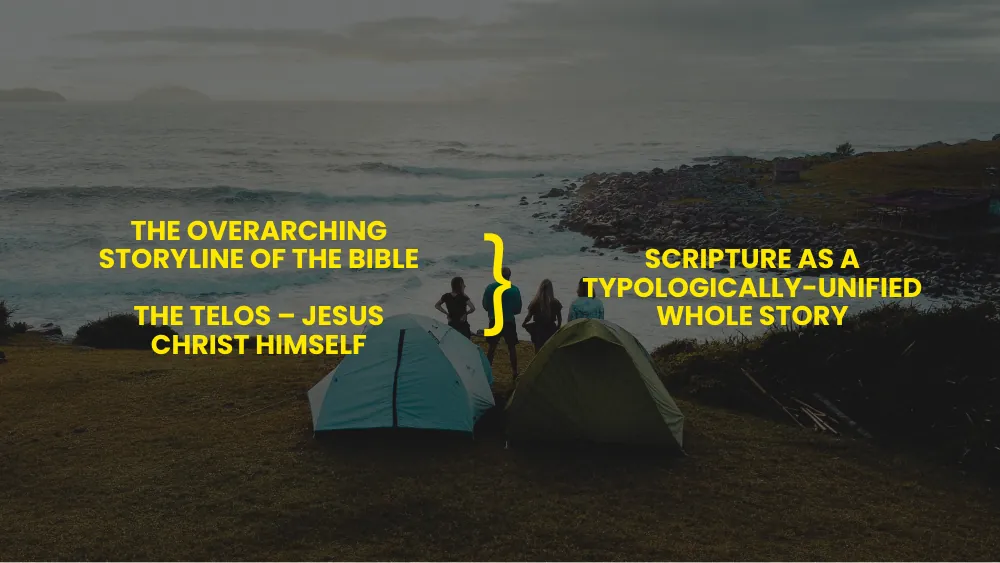
Forward reading: ascending with expectation
Reading the Bible as a story is a way of forward reading, while reading the Bible in light of Christ is a way of backward reading. They are like seeing different views on the same hiking trail on the way up and down. Ascending the mountain is not Moses’ privilege; Jesus also invites his disciples to a mountaintop to experience his transfiguration and the revelation of his full glory. So, let’s take an adventure with Jesus and ascend with expectations, as if it’s a trail that we’ve never hiked before, knowing something beyond our imagination is waiting for us. As we let the overarching storyline of the Scripture unfold over time, curious readers will inevitably start to notice some patterns, which serve as signposts that indicate the summit is approaching. Typology is the study of the patterns in the Bible, which is rooted in historical reality. Earlier events, people, and institutions in the redemptive history point forward to their ultimate fulfillment in the person and work of Jesus. Colossians 2:17 draws the connection: “These are a shadow of the things that were to come; the reality, however, is found in Christ.” Jesus is the telos — the goal or destination that the trajectory of the Bible leads to. This is the trail on which we are not just walking with Jesus, but also walking towards Jesus. When we arrive at the mountaintop and behold the glory of the Son, we will be captured by the beauty in the theophany. All the effort will be worth it because we know God still meets His people on the mountaintop.
Backward reading: returning, transformed
Then we shall return, transformed. Backward reading is more retrospective and christological, a theological lens for us to see Christ playing in ten thousand places. It’s like rewatching a movie after knowing the ending. (By the way, who would only watch their favorite movies once?) Dots start to connect, patterns start to make sense, and unnoticed details start to grab our attention. When we hike the trail for the first time, we may be frustrated by what we encounter – the promises that outgrow their immediate fulfillment, the partially working solutions, and the cliff-hanger situations. The unresolved feeling in the forward reading would be settled in the backward reading, through which we can see why the fulfillments are not forced, but necessary. Forward reading is reading the Scripture with Moses, the Psalmist, and the prophets, and seeing God consistently acting in history. Historical integrity prevents us from washing down the Old Testament into merely moral lessons. Backward reading is joining with Jesus and the apostles and being taught by them to reread the story of Israel. “In Your light we see light” (Psalm 36:9b). Clarity, coherence, and new depth would naturally flow out when we read the Scripture in light of Christ.
The dual nature of the Word of God (humanity and divinity) leads to both aspects of our posture before the Scripture (philology and christology), and therefore, both orientations of our approach to the Scripture (forward reading and backward reading). Now, let’s sum them up with a theological frame of reference that forms the reading culture.
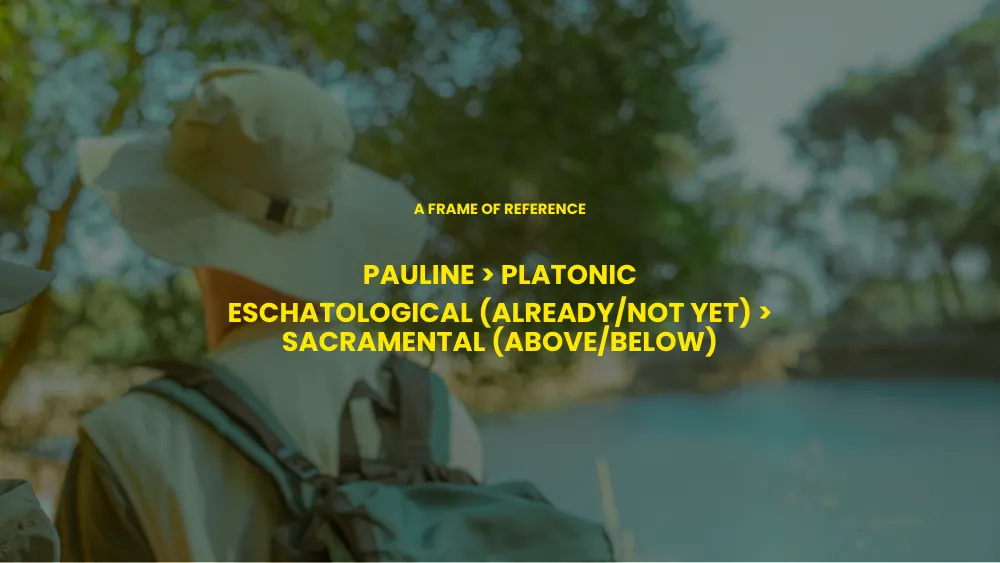
A frame of reference
In Mere Christian Hermeneutics, Vanhoozer suggests a hermeneutical frame of reference that is more Pauline than Platonic, more eschatological than sacramental. It is an interpretive approach grounded in the actual movement of redemptive history rather than timeless metaphysical participation. The way Apostle Paul embodies and preaches the gospel in his letters indicates his theological frame that salvation is dynamic. He uses covenantal speech to point out how Jesus re-lived and fulfilled the story of Israel, which becomes the foundation of the kingdom message he proclaims. The fullness of time has arrived (Galatians 4:4), and “now,” says Paul, “is the day of God’s salvation” (2 Corinthians 6:2). The kingship and the new creation have been inaugurated through the resurrection of Jesus Christ. Heaven and earth start to overlap, eternity invades human history, and Christ is the Lord of all. A Pauline frame refuses to settle for any lesser story.
On the contrary, a Platonic frame is static because it often seeks the universal truths “behind” or “above” the text. Just as the Platonic dualism that separates human souls from human bodies, a sacramental ontology would prompt the interpreter to look for a hidden meaning beneath the literal. Under a Platonic frame, heaven on earth is not a united future reality but two separate worlds; to enter eternity is to escape from history; and the “self” becomes the ultimate parameter. In favor of an abstract spiritual realm, a Platonic frame can lead to an allegorization that overlooks the weight and depth of the redemptive history.
A good frame of reference does not simply provide a set of doctrines to convince minds, but points to a lived reality — the true story of the world for us to inhabit. We need a right frame of reference to shape our eschatological responsibility — we live today in light of the future God has promised. If creation will be renewed, then care for creation matters; if resurrection is bodily, then embodied holiness matters; if the church is the end-time temple, then communal faithfulness matters.
A reading community
This is what it looks like to be transformed by the renewing of the mind. And living out the kingdom reality is not a private work but a cooperative process. When a community reads the Bible faithfully, for hope, and with love, a reading culture is cultivated, forming the people of God into Christlikeness. Lastly, let 2 Peter 3:18 be the reminder and encouragement for those who are walking on this journey together: “But grow in the grace and knowledge of our Lord and Savior Jesus Christ. To him be glory both now and forever! Amen.”
Paul Canaan
The slides
All twelve slides in one PDF, ready to project or print.
Bring it to your group
These resources may be used in churches, small groups, classes, discipleship cohorts, workshops, retreats and personal study. Before you lead one:
- Adapt the examples to your local context.
- Keep the biblical and theological structure.
- Don’t remove the formation practices just to save time.
- Prepare your facilitators before the group begins.
Full facilitator guides, with setup, timing, safety notes and discussion questions, are available on request. For teaching, publishing, translation, partnership or licensing, contact The Garden Project.